

SafetyNet Webinar: The Global State of Patient Safety Report
Join us for this special SafetyNet webinar on The Global State of Patient Safety report 2025, where report authors Bryony Dean Franklin, Melanie Leis and Sophia Batchelor will discuss the key findings of the report and demonstrate the global state of patient safety dashboard.
Date: 25 March 2026
Time: 10 – 11am
Where: Online (Zoom)
The Global State of Patient Safety report 2025 from the Institute of Global Health Innovation at Imperial College London and Patient Safety Watch, and supported by the NIHR North West London PSRC, was launched by Health Secretary Wes Streeting MP and former Health Secretary Sir Jeremy Hunt MP at the House of Lords Thursday, 29 January.
This is the second report in the series, with the first published in 2023. The ranking assessed the 38 countries using the same four measures as in 2023:
- Maternal mortality (deaths per 100,000 live births) – all causes of maternal deaths
- Neonatal disorders (deaths per 100,000 live births) – a combined indicator comprising the five main causes of neonatal death
- Treatable mortality (deaths per 100,000 people) – due to causes like sepsis that can be mainly avoided
- Adverse effects of medical treatment (deaths per 100,000 people) – deaths from a medical procedure or treatment.
Analysis of more than 100 patient safety indicators found that, globally:
- Excess mortality for people with severe mental illness is a major concern. For people with bipolar disorder, excess mortality has risen by 41 per cent since 2015, and by 21 per cent in the same period for people with schizophrenia.
- In 2023, there were approximately 103,000 deaths due to the adverse effects of medical treatment.
- Average waiting times for selected planned procedures, which increased during the pandemic, are largely returning to pre-pandemic levels.
- Average rates of maternal deaths, stillbirths and neonatal deaths continue to fall, and neonatal mortality rates (deaths of babies under 28 days old) have fallen 46 per cent since 2000.
Meet the speakers
 Professor Bryony Dean Franklin
Director NIHR North West London Patient Safety Research Collaboration
Executive Lead Pharmacist Research & Director, Centre for Medication Safety and Service Quality Imperial College Healthcare NHS Trust
Co-Editor-in-Chief, BMJ Quality and Safety
Professor Bryony Dean Franklin is visiting Professor at the Centre for Prevention and Management at Imperial College.
Professor Franklin is Director of the National Institute for Health Research (NIHR) North West London Patient Safety Research Centre (NWL PSRC), and co-lead of a theme focusing on developing technologies that enhance medication safety. She is also Executive Lead Pharmacist (Research), Imperial College Healthcare NHS Trust and Director of the Centre for Medication Safety and Service Quality (CMSSQ), a joint research unit between Imperial College Healthcare NHS Trust and UCL School of Pharmacy where she is Professor of Medication Safety. Professor Franklin has been co-Editor in Chief of the journal BMJ Quality and Safety since 2020; prior to that she was Associate Editor and then Senior Editor at the journal.
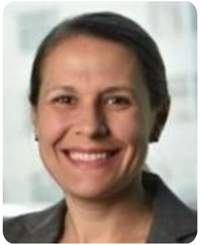 Melanie Leis
Director of Policy and Analysis, Centre for Health Policy
Institute of Global Health Innovation, Imperial College
Melanie Leis is the Director of Policy and Analysis of the Centre for Health Policy, part of the Institute of Global Health Innovation (IGHI). She leads the Centre’s development of analytics tools and policy outputs to support global decision-makers as they address some of the most pressing challenges in healthcare, including patient safety and digital health. Previously, Melanie was the Director of IGHI’s Big Data and Analytical Unit (BDAU).
Before joining Imperial in 2018 Melanie worked for McKinsey & Company, where she helped healthcare clients in the US and the UK use analytics to improve cost and quality of care for patients.
Melanie holds a Master of Public Administration (MPA) and a Master of Arts in International Relations (MAIR), both from the Maxwell School of Citizenship and Public Affairs of Syracuse University. She holds a bachelor’s degree in economics from Universidad de Costa Rica.
 Sophia Batchelor
Analytics Fellow, Centre of Health Policy
Institute of Global Health Innovation, Imperial College London
Sophia Batchelor is a data and analytics fellow at the Institute of Global Health Innovation (IGHI), where she leads statistical and computational analysis across global health policy and patient safety research projects. Working within the Centre for Health Policy, she specialises in large-scale health data science, statistical modelling, and visual analytics to generate policy insights for health systems in the UK and internationally. Sophia was the analytical lead for The Global State of Patient Safety 2025 report and dashboard, an international synthesis of patient safety indicator data and knowledge from over 200 countries which assessed safety performance and inequalities across health systems. Her role involved bringing together complex multi-source datasets, developing robust cross-national comparative metrics, and building an interactive dashboard to support policy development and strategic decision making. In parallel, Sophia contributes to analyses as part of the Networked Data Lab and leads statistical evaluations of digital mental health and behavioural public health interventions, bringing a quantitative lens to understand service demand, risk, and surface where current digital and health system responses may inadvertently reinforce or widen existing inequalities. Sophia’s expertise spans health data science, statistical modelling, and computational reproducibility, with a particular interest in shaping safer and more equitable healthcare systems for all.
Related


PSRC network
NIHR Central London PSRC
NIHR Greater Manchester PSRC
NIHR Midlands PSRC
NIHR Newcastle PSRC
NIHR North West London PSRC
NIHR Yorkshire & Humber PSRC
Copyright © NIHR PSRC Network. All rights reserved.
Site hosted by The University of Manchester.

0 Comments