

National Martha’s Rule Summative Evaluation
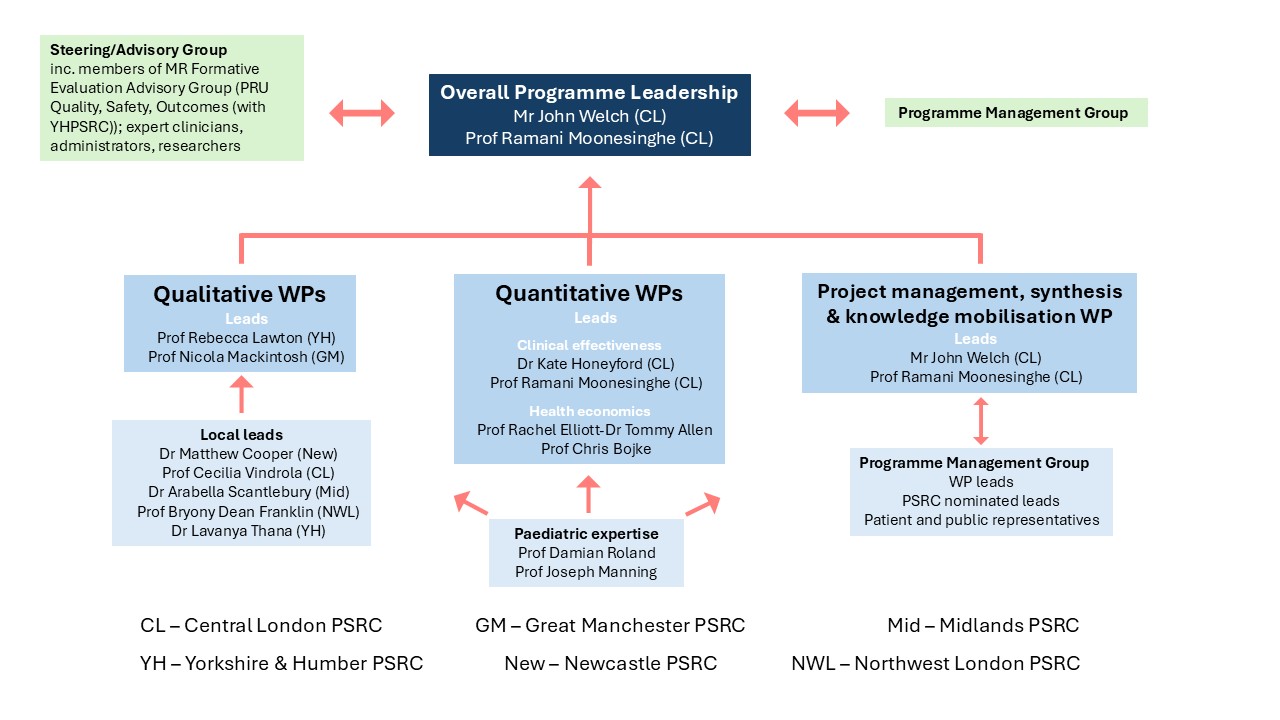
This study is funded by the National Institute of Health and Care Research (NIHR) and is conducted by the six NIHR Patient Safety Research Collaborations (PSRCs), under the leadership of the NIHR Central London PSRC.
For any queries, please contact: marse@ucl.ac.uk
In April 2024, NHS England began implementing and testing Martha’s Rule in 143 hospital sites across England, as part of a major patient safety initiative aimed at protecting patients during their hospital stay. The initiative ensures that patients’ insights and concerns about their illness and recovery are consistently heard and acted upon. Tragically, some patients die in hospital because their concerns are not acknowledged or addressed. Martha’s Rule requires that patients are asked daily about how they are feeling, and it also enables patients, families, and staff to seek expert help in managing serious illness if a patient’s condition deteriorates and they feel their concerns are not being adequately responded to.
Although Martha’s Rule has been widely implemented, many unanswered questions remain about the most effective ways to implement it and whether it reduces patient deterioration across all groups. In response to an NIHR funding call to evaluate the impact of Martha’s Rule on patient safety improvement, the network of all six NIHR Patient Safety Research Collaborations (PSRCs) has started a large-scale summative evaluation of the initiative.
The study builds upon a formative evaluation conducted by the NIHR Policy Research Unit in Quality, Safety and Outcomes of Health and Social Care, which provided an in-depth exploration of how Martha’s Rule was being introduced using a case study approach across three NHS Acute Hospitals.
The summative evaluation will bring together leading patient safety researchers, clinicians, patients and public contributors to examine how Martha’s Rule is working in practice and its impact on patient outcomes, healthcare inequalities and NHS services.
The three-year research programme is being led by the NIHR Central London PSRC based at UCLH and delivered by SafetyNet – the NIHR PSRC Network. Each PSRC will study how Martha’s Rule is working in its own region and share findings nationally.
Funded by the NIHR, the PSRCs carry out research to improve patient safety across England, with a collective goal to address and reduce inequalities in health and social care. Find out more about the NIHR PSRCs.
About the study
The study will provide the first comprehensive national evaluation of the initiative, generating evidence to inform the future development of Martha’s Rule across the NHS.
Researchers will analyse data from all acute NHS hospitals implementing Martha’s Rule to understand how different approaches to implementation affect patient safety outcomes, including rates of clinical deterioration, escalation of care, intensive care admissions and mortality.
Alongside this national analysis, researchers will undertake detailed work in 16 NHS trusts across England in a wide range of hospital settings, patient populations and regions. Through observations, interviews and detailed case studies, the team will explore how Martha’s Rule is being delivered on the ground and how it is experienced by patients, families and healthcare professionals, and the factors that help or hinder its success.
One important aspect of the study is to understand how Martha’s rule impacts on detecting and escalating deterioration across different patient groups, including how the initiative works for people who may face barriers to having their concerns heard, including people with communication difficulties, cognitive impairment, language barriers and those from underserved communities.
The programme will also assess the wider impact of Martha’s Rule on NHS services, examining how it affects clinical workloads, specialist review teams and healthcare resources. Health economists will evaluate whether the initiative represents good value for money while also considering its potential contribution to reducing healthcare inequalities.
Importantly, patients and family members with lived experience of serious deterioration and patient harm will play a central role throughout the study. Working alongside researchers as equal partners, they will help shape the research, interpret findings and ensure the evaluation remains focused on what matters most to patients and families.
The findings will be shared with NHS organisations, policymakers and healthcare professionals throughout the life of the project, helping to support the ongoing implementation of Martha’s Rule and improve patient safety across England.
Issues to be explored, using mixed research methods throughout:
- Implementation processes and lessons learned
- Workload of managing deterioration (structures, processes – activity)
- Patient outcomes
- Health inequalities and equity of services
- Impact on staff and organisations
- Macro and micro culture
- Costs and benefits
- Unintended consequences
- How to evaluate complex interventions at scale
Research scope
Scope
- Martha’s Rule Phase 1 and Phase 2 sites – NHS acute hospitals across England (n = 221)
- 16 sites for in-depth qualitative study
- Adult & paediatric models sampled to capture institutional differences
- Maternity and neonates out of scope
Patient & Public Involvement & Engagement (PPIE) and Equality Impact
- Need for diverse patient representation – to ensure evaluation reflects full spectrum of patient experiences and needs
- Need to capture patient priorities such as feeling heard as well as traditional outcome measures
- Need to consider effects on staff, system burden, risk management
- Equality impact assessment
Qualitative workstreams (with crosstalk with Quantitative Team)
Sixteen qualitative sites across six PSRC regions
- Documentary Analysis
Review and analysis of key documents: Standard Operating Procedures and communications materials, structured wellness question aids and recording forms, etc.
- Two phases of data collection involving:
- Research observations
- General ward observations
- Focused observations of clinical meetings and events (e.g., handover, safety huddles, episodes of acute deterioration), and risk meetings, shadowing critical care outreach or similar or equivalent services
- Focused observations of the Patient Wellness Question(naire) (audio recorded in 2 sites*)
- Interviews with range of patients (including CYP), family, implementation team, ward managers and medical staff, CCOTs, medical directors, Health Innovation Network leads
Six of the sixteen qualitative sites also quantitative Electronic Health Record sites
- Public awareness survey: update (early discussions with YouGov to plan 20 item survey underway
Quantitative workstreams (with crosstalk with Qualitative Team)
Health Economics analyses throughout
- Time-series analyses of all sites
- Hospital Episode Statistics (HES) & Office for National Statistics (ONS) data
- Care Hours Per Patient Day (CHPPD) data
- NHS England Martha’s Rule returns*
- Analyses of most/all sites’
- DESERVE data
- Resourcing / infrastructure/ways of working of rapid response systems x 2
CCOT(s)
- Whole weeks’ activity data re. all deteriorating patients (Martha’s Rule cases and all others) x 3
- Time-series analyses at six sites (also qualitative sites)
- Electronic Health Records
About Martha’s Rule
Martha Mills died in 2021 after developing sepsis in hospital, where she had been admitted with a pancreatic injury after falling off her bike. Martha’s family’s concerns about her deteriorating condition were not responded to, and in 2023 a coroner ruled that Martha, aged 13, would probably have survived had she been moved to intensive care earlier.
In response to this, and other cases related to the management of deterioration, the then Secretary of State for Health and Social Care and NHS England committed to implement ‘Martha’s Rule’ – a patient safety initiative as part of a wider NHS strategy to ensure the vitally important concerns of the patient and those who know the patient best are listened to and acted upon.
Martha’s Rule is intended to give patients, families, carers and staff, 24 hours access to rapid review from a critical care outreach team (CCOT) or paediatric critical care outreach team, if they are worried about a person’s condition.
Martha’s Rule includes three components:
- The NHS must introduce a structured process to gather daily feedback from patients and families about their condition (initially for all in-patients in acute and specialist Trusts).
- All staff must have 24/7 access to a CCOT for concerns about patient deterioration;
- All patients, families, carers, and advocates must have access to the same 24/7 CCOT review, via well-publicised mechanisms;
In April 2024, NHS England introduced the implementation and testing of Martha’s Rule in 143 hospital sites across England.
Read more on https://www.england.nhs.uk/patient-safety/marthas-rule/
DESERVE
National Evaluation of Deteriorating Patients Services: a Martha’s Rule Summative Evaluation sub-study
DESERVE is an NHS-wide evaluation investigating the services available to support unwell and deteriorating adults and children in hospitals across England. This will enable an understanding of the variety and extent of these services available nationally and how they have developed over time.
This national service evaluation is a sub-study of the NIHR-funded Martha’s Rule Summative Evaluation.
DESERVE aims to determine the current provisions across the NHS for unwell and deteriorating patients in acute hospitals:
- The teams or individuals that respond to acute illness and deterioration
- The warning scores and escalation pathways used.
- The changes and improvements that may have occurred through the recent introduction of Martha’s Rule.
- How structures and processes may affect patient outcomes.
DESERVE study committee
The sub-study is organised and delivered by the Martha’s Rule Summative Evaluation team:
Principal Investigators: Mr John Welch and Prof Ramani Moonesinghe
The study committee includes: Dr Kate Honeyford, Dr Dave Brealey, Dr Katharina Kohler, Dr Chris Woodmansey, Prof Joseph C. Manning, and Dr Damian Roland.
How will the DESERVE study work?
Data collection will be via online forms sent after the recruitment invitation is completed (using the REDCap (Research Electronic Data Capture) system). The data collected will focus on health service interventions and workload rather than patient factors. Any patient variables will be de-identified.
When will the DESERVE study happen?
The survey of sites’ structure and processes to be completed by end of August 2026 (e.g., make-up of responding individuals or teams and escalation protocols used,
Details of patients escalated and their outcomes (activity and workload) for a one-week period in either September, October or November 2026. (This will be repeated in a one-week period in 2027, and in 2028).
What would we like you to do?
If you are involved in caring for deteriorating patients, we would like you to complete the recruitment invitation with:
- Information about your hospital site(s) deteriorating patient services.
- Contact details for site leads who will be able to report on how their service(s) manage deteriorating patients
Data collection details
The site survey – investigating the resource provisions for deteriorating patients across the NHS – will be open from June 2026 with completion date by the end of September 2026.
- Data will be collected onto the webforms directly
- Each outreach service will be a designated site and will submit a separate site survey
One-week snapshot audit – investigating activity and (anonymised) patient outcomes over a 7-day window – will be in a 7-day period of the local site’s choosing between 15/09/2026 – 30/11/2026.
- Local sites will be enter data directly into the webforms, or if preferred paper forms will be available which can be used on-shift and during the data collection period, for local Collaborators to then enter the data into the webforms later on.
- All Site Leads & Local Collaborators (as agreed within each site) will be named and listed within the collaborative authorship section
Survey protocol
Download the DESERVE survey protocol
Data Privacy
To understand whether the introduction of Martha’s Rule is effectively improving patient safety across the NHS, our research team analyses historical and current records of hospital care in England. We use data provided by NHS England and the Office for National Statistics, specifically pseudonymised Hospital Episode Statistics (HES) and Civil Registration Data (CRD). This information allows us to evaluate systemic changes in patient outcomes, such as days alive and out of hospital, length of stay, and unplanned admissions to intensive care, helping us determine if the initiative is leading to safer care.
We take patient privacy and data security extremely seriously. All the data we use for this evaluation is strictly pseudonymised, meaning that identifying details – such as names, addresses, dates of birth, and NHS numbers—are completely removed or replaced with a meaningless code before our researchers ever access it. We cannot, and will not, attempt to identify any individual patient. Furthermore, our team does not download or store this data on our own computers. All analysis takes place exclusively inside the NHS National Secure Data Environment (SDE), a highly secure, heavily monitored digital system that ensures the data never leaves NHS control.
University College London (UCL) acts as the Data Controller for this study, meaning it is legally responsible for ensuring the information is used safely, legally, and ethically. The University of Manchester also supports this project as a Data Processor, conducting health economics analysis under UCL’s strict governance.
Because the data we analyse is already pseudonymised and locked within the NHS SDE, our researchers cannot identify individual records to remove them. Therefore, the NHS National Data Opt-Out does not directly apply to this specific analysis. However, we fully support patients’ rights to control their health data. For full legal details regarding your rights under UK Data Protection law (UK GDPR) and how UCL handles research data, please read the official UCL General Privacy Notice for Health and Care Research Studies. You can also learn more about opting out of sharing identifiable data on the NHS National Data Opt-Out website.
Supported by:

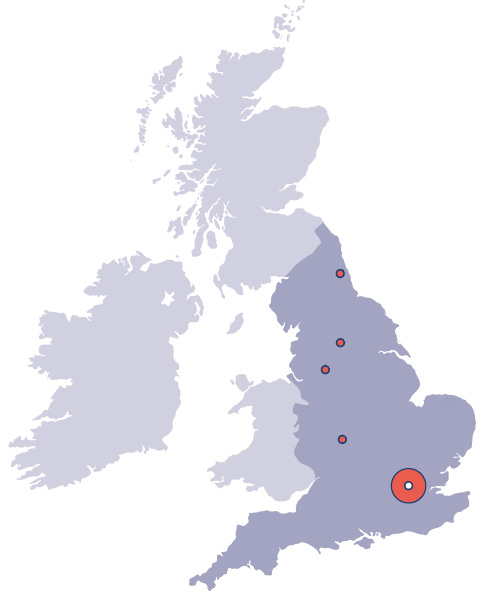
Meet the six NIHR PSRCs
Subscribe to the SafetyNet Newsletter
Keep up to date with the latest news, opportunities, research impact from the six NIHR PSRCs.



PSRC network
NIHR PSRC: Central London
NIHR PSRC: Greater Manchester
NIHR PSRC: Midlands
NIHR PSRC: Newcastle
NIHR PSRC: North West London
NIHR PSRC: Yorkshire & Humber
Copyright © NIHR PSRC Network. All rights reserved.
Site hosted by The University of Manchester.